What Is Gingivitis and How Is It Treated?
- 1. What is Gingivitis and How is it Treated?
- 2. What is Gingivitis?
- 3. What Causes it?
- 4. Signs to Watch For
- 5. How is Gingivitis Treated?
- 6. The Role of Laser Therapy in Gum Treatment
- 7. What Happens if Gingivitis is Left Untreated?
- 8. Keeping Your Gums Healthy Long Term
- 9. Schedule a Gum Health Evaluation at Different Dental
- 10. Frequently Asked Questions
What is Gingivitis and How is it Treated?
If your gums bleed when you brush or floss, feel tender, or look redder than usual, there is a good chance gingivitis is involved. It is one of the most common dental conditions – and one of the most frequently overlooked, because the early signs are easy to dismiss.
The good news is that gingivitis is reversible when caught early. At Different Dental in Woodridge, IL, Dr. Stephen Martin works with patients at every stage of gum health to understand what is happening and build a plan to address it.
What is Gingivitis?
Gingivitis is an early form of gum disease characterized by inflammation of the tissue surrounding the base of the teeth. It develops when plaque – the sticky film of bacteria that forms on teeth – is not removed consistently through brushing and flossing, irritating the gum tissue over time.
Unlike more advanced gum disease, gingivitis affects only the soft tissue and does not yet involve the underlying bone. Treated at this stage, the condition can be fully resolved without lasting damage – which is why early identification matters.
What Causes it?
The primary cause is plaque buildup along and below the gumline. When not removed consistently, plaque hardens into tartar – a deposit that cannot be cleared with a toothbrush and requires professional cleaning. The longer it remains, the more persistent the irritation to the surrounding tissue.
Several factors can make a person more susceptible to developing gingivitis:
- Inconsistent or ineffective brushing and flossing habits
- Smoking or tobacco use, which reduces the mouth’s ability to fight infection
- Certain medications that affect saliva production or gum tissue health
- Hormonal changes, such as those during pregnancy or menopause
- Systemic conditions such as diabetes, which can affect the body’s inflammatory response
Gingivitis does not always cause pain, which is why many patients are unaware they have it until it is caught at a routine visit. Regular dental checkups and cleanings remain one of the most effective tools for identifying it before it progresses.
Signs to Watch For
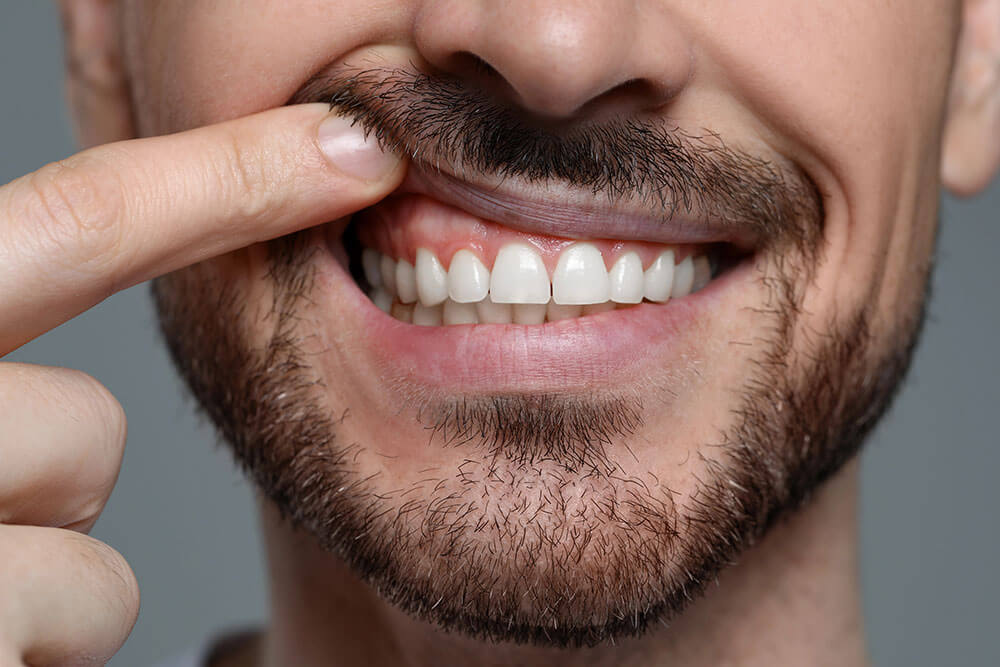
The most common signs include gums that bleed during brushing or flossing, persistent bad breath, tissue that appears red or swollen rather than its normal pink, and gums that feel tender or puffy. Because these symptoms can be subtle, they are easy to attribute to other causes – which is why scheduling an evaluation is the most reliable way to know what is actually happening.
How is Gingivitis Treated?
In most cases, treatment starts with a professional cleaning to remove plaque and tartar that cannot be reached at home. Consistent daily care – brushing along the gumline, flossing thoroughly, and using any rinse your dentist recommends – then allows the tissue to heal. Our gingivitis therapy and gum infection treatment at Different Dental is designed to address the bacterial environment driving the inflammation, not just the surface symptoms. For some patients, additional tools play a meaningful role in that process.
The Role of Laser Therapy in Gum Treatment
At Different Dental, we offer laser-based therapies that can support gum health in ways that traditional cleaning alone does not always achieve. Two options are particularly relevant for patients dealing with gum disease.
Our laser bacterial reduction treatment uses a dental laser to target harmful bacteria in the gum pockets around the teeth. By reducing that bacterial load directly, it helps create an environment where gum tissue can respond more effectively to cleaning and heal more thoroughly – and it can be incorporated into a routine appointment for appropriate patients.
We also offer low-level laser therapy, which uses light energy to support healing in soft tissue rather than targeting bacteria. It can help reduce inflammation and discomfort and promote recovery in gum tissue – a useful addition to the care plan for patients dealing with significant irritation or recovering from treatment.
Dr. Martin will discuss whether either option is appropriate based on the condition of your gums at your exam.
What Happens if Gingivitis is Left Untreated?
Untreated gingivitis can progress to periodontitis, where infection extends below the gumline and affects the bone and connective tissue supporting the teeth. At that stage, the damage is no longer fully reversible and treatment becomes significantly more involved. Advanced gum disease is one of the leading causes of tooth loss in adults and has been linked to broader health concerns including cardiovascular disease and diabetes complications.
Keeping Your Gums Healthy Long Term
Keeping gingivitis from returning comes down to consistent home care – brushing twice a day and flossing daily – combined with regular professional visits. Dr. Martin will tailor the cleaning schedule to your history and how your tissue responds rather than applying a standard interval.
Addressing contributing factors such as tobacco use or dry mouth is also part of the picture. If decay is a concurrent concern, treating it with dental fillings limits the bacterial environment around the tooth margin that can aggravate gum tissue.
Schedule a Gum Health Evaluation at Different Dental
If you have noticed any signs of gum irritation, or if it has been a while since your last visit, Dr. Stephen Martin and the team at Different Dental are here to help. We will evaluate your gum health, explain what we find clearly, and put together a plan that makes sense for your situation.
We are conveniently located at 6440 Main St., Suite 310, Woodridge, IL 60517, and welcome patients throughout the week with appointment availability designed to fit your schedule. Call 630-442-0833 to schedule your visit, , or explore our dental services online.
Frequently Asked Questions
Gingivitis is the earliest stage of gum disease. It is confined to the soft tissue and fully reversible with proper care. Left untreated, it can progress to periodontitis – which affects the bone and supporting structures and is not reversible – making early treatment the most straightforward way to prevent that outcome.
Once tartar has formed, it cannot be removed with a toothbrush – professional cleaning is necessary. Relying on better brushing alone is not a reliable solution, and delaying care gives the condition more time to advance.
Professional cleaning is generally well tolerated. Some patients with inflamed tissue experience mild sensitivity afterward, but this typically settles quickly as the tissue heals.
Patients with a history of gingivitis are often advised to come in every three to four months rather than the standard twice a year, depending on how their tissue responds. Dr. Martin will recommend a schedule based on your specific history.
Disclaimer
This content is intended for general informational purposes only and does not constitute medical or dental advice. Every patient’s situation is unique, and treatment experiences may vary. Please consult with a qualified dental professional for guidance specific to your individual needs and circumstances.